










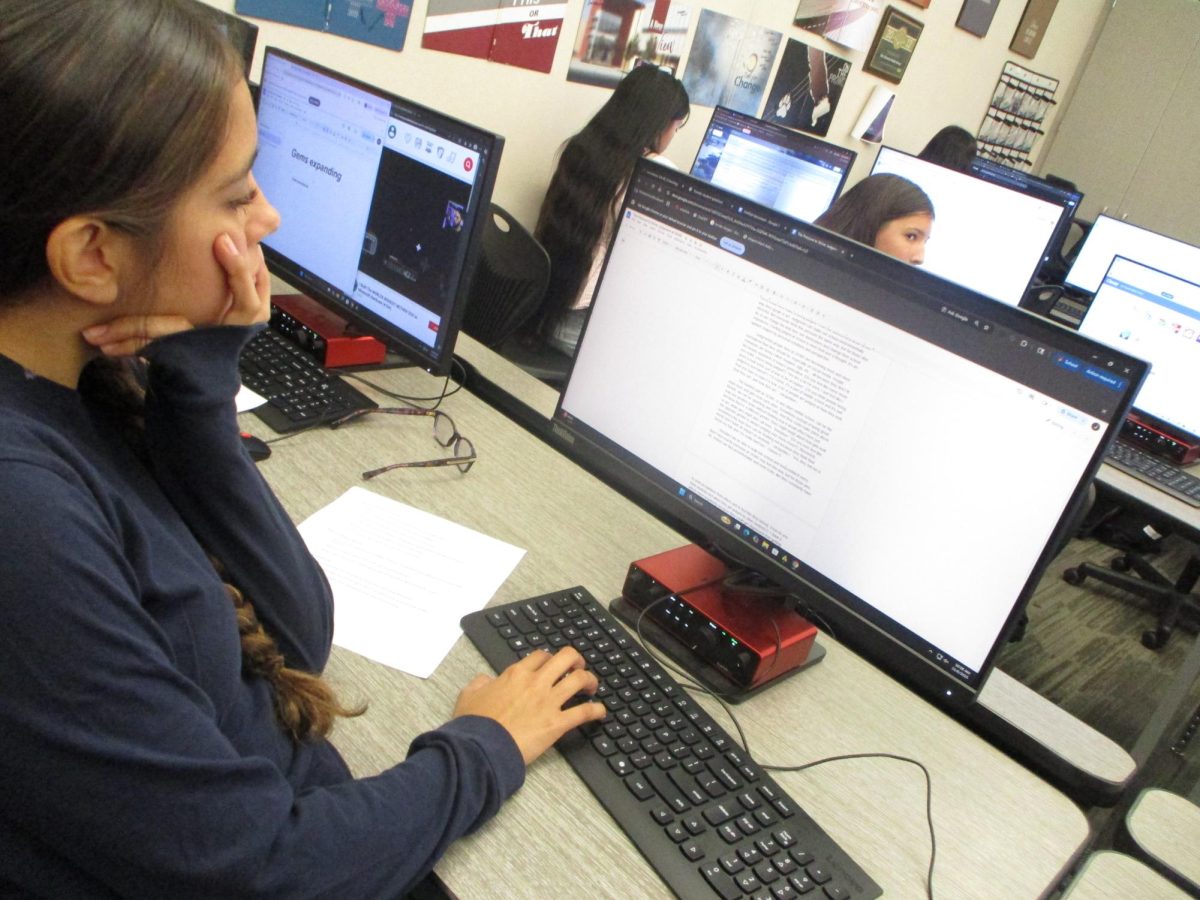
Many people, including students and teachers, find Chromebooks convenient to use because everything is stored digitally and can be saved, graded, and assigned in short periods of time. But do they take health issues into consideration? School is usually 5–8 hours long, with 6 periods, meaning in at least 80 percent of classes teachers require students to use their computers to complete assigned work, opening and closing their Chromebooks almost every single class.
Studies have shown that school screen time can be educational and interactive, potentially boosting learning skills, while excessive use is linked to negative outcomes like anxiety, depression, sleep disruption, and poorer academic performance. The specific effects depend heavily on the type of screen time, its duration, and how it is moderated.
Moderating the amount of screen time each student uses should be a very important factor in their lives because we should take into account not only the amount of screen time students get during school hours (the recommended limit for kids is about 2 hours), but also how much screen time they get at home on phones, computers, and other devices.
Studies have also found links between excessive screen time and physical changes in the brain’s cortex, which is associated with thinking and reasoning. This raises concerns about brain development, especially in younger people.
Not only can this be mentally straining, but it can affect students physically as well. Blue light can cause digital eye strain and disrupt sleep cycles. This is a problem because students may lose motivation due to drowsiness at school and may struggle to focus on getting through the day.
To conclude, schools should limit the use of screen time. Although computers are handy, they can potentially contribute to poor academic performance, negative physical changes, and reduced sleep, all of which can increase anxiety.